If you’ve ever ordered thin-wall aluminum CNC parts — EV cooling plates, battery housings, or lightweight brackets — you’ve probably seen this:
The parts measure perfect on the machine, come off the fixture, and two hours later they’re warped 0.08mm. Flatness is gone, sealing surfaces don’t mate, and the whole batch is borderline scrap.
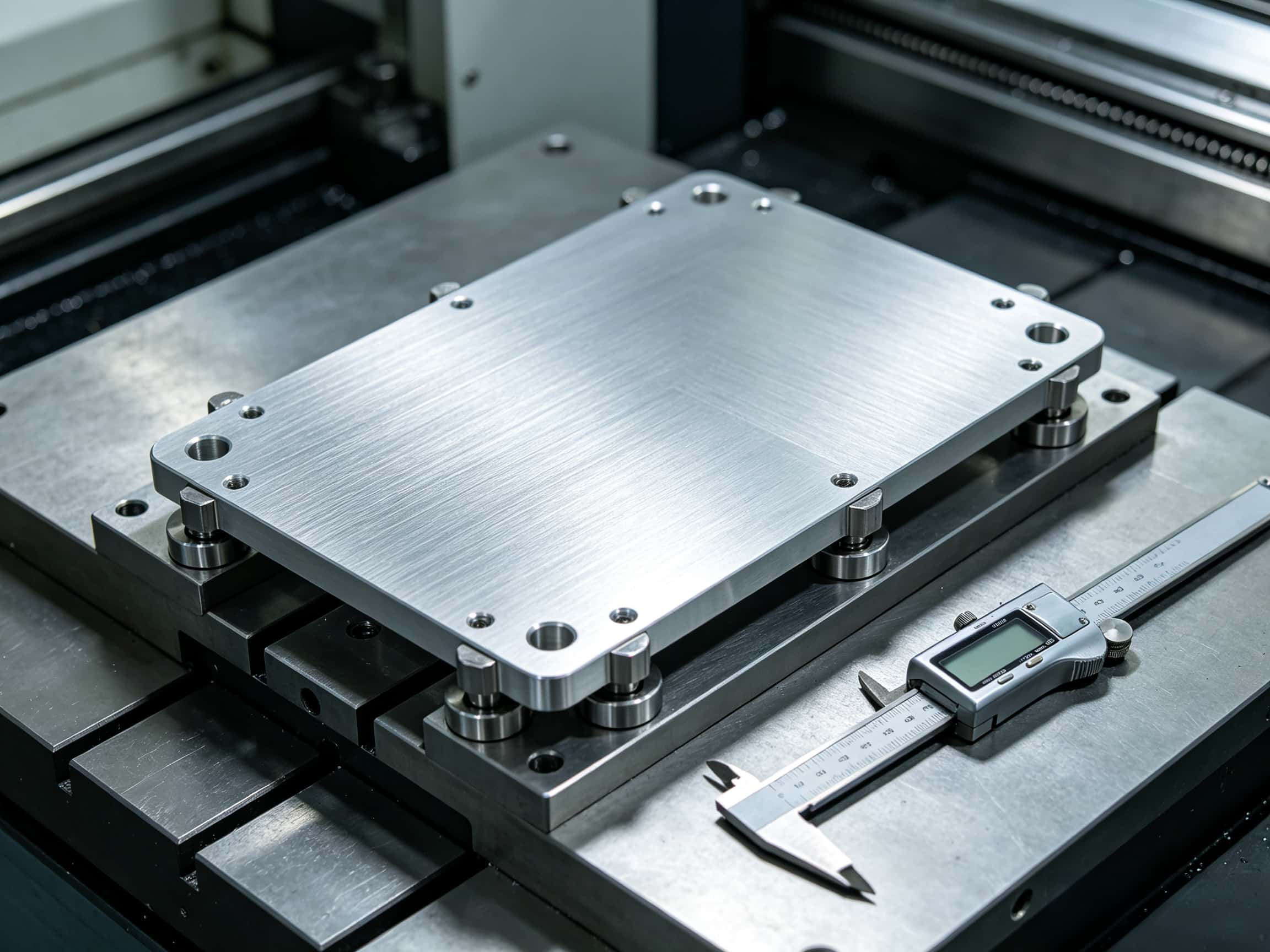
We know this pain firsthand. Back in 2020, when EV work first started ramping up, we ruined an entire 50-piece batch of 6061 cooling plates for a UK-based startup. We clamped them hard to hit tolerance, released the fixture, and residual stress pulled every single part out of flat. The client was understandably frustrated. We ate the cost — both the material and the air freight to re-deliver — and spent the next three months rebuilding our thin-wall process.
After 12 years in precision machining and hundreds of thin-wall EV projects, we’ve settled on seven rules that actually work. No textbook theory. Just what we do on the shop floor now.
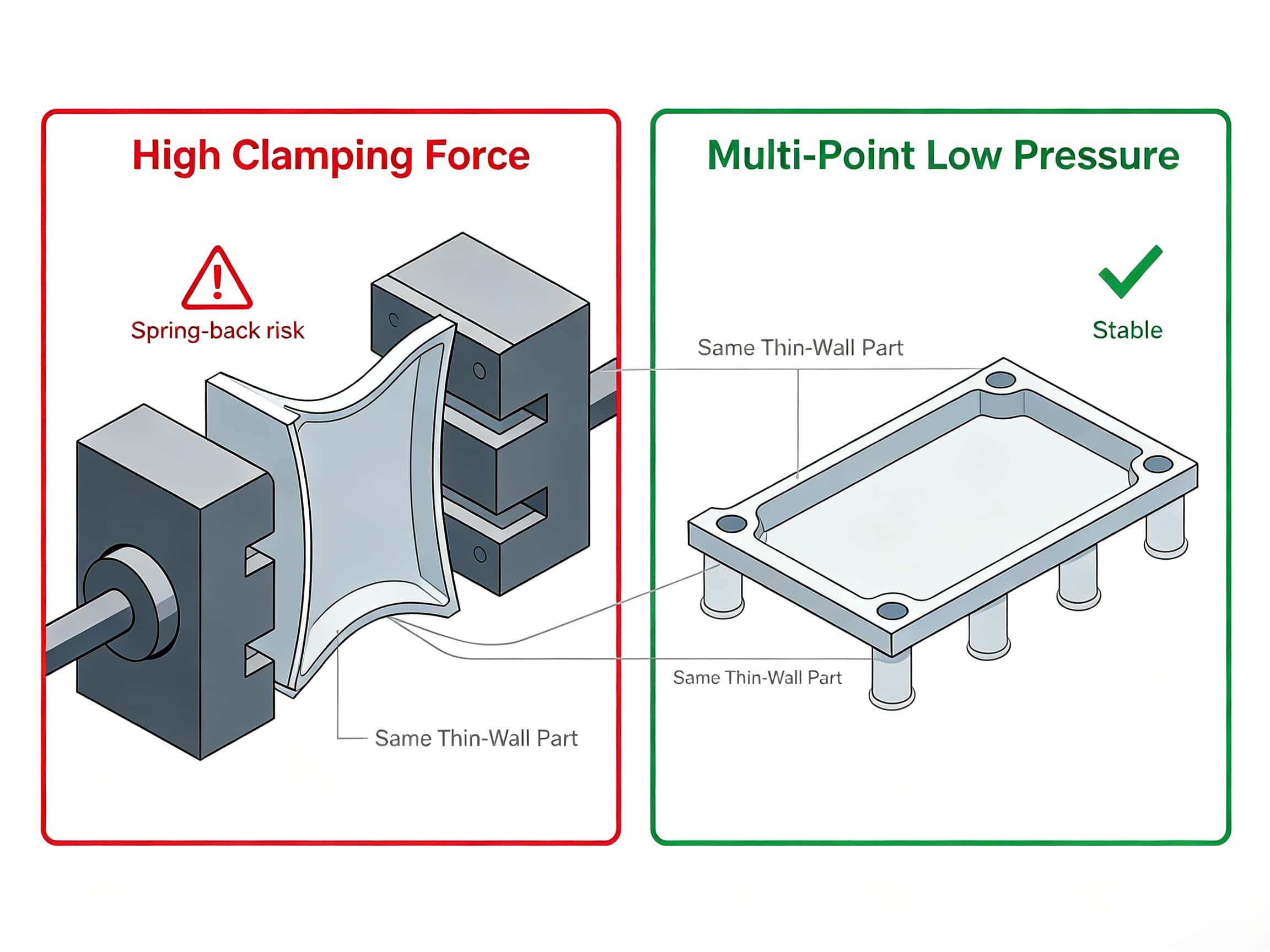
The most common mistake new shops make: cranking the clamps as tight as possible to stop the part from moving.
All that does is bend the part while you cut it. When you release the clamps, it springs back — and you’ve got a warped part.
What we do now:
We use custom low-stress fixtures with multiple small support points — typically 6–8 points for a 200×150mm part — instead of two or three big clamps. For wall thickness under 3mm,
we machine soft jaws that match the part contour exactly. Clamping force is set just enough to locate it. Not enough to deform it.
This one change cut our post-machining warp rate by about 60% across thin-wall work.
Residual stress in aluminum billet is the silent killer. When you machine away 70% of the material in one go, you’re releasing stress unevenly. The part warps as it relaxes.
Our standard routine for thin-wall parts now:
· Rough out about 80% of the material, leave 0.8–1.2mm of stock on all walls
· Unclamp the part completely and let it sit for 4–8 hours — overnight for critical jobs
· Re-clamp lightly and take the final finishing pass
Yes, it adds time. No, it’s not “faster.” But it cuts warp by roughly 80% and eliminates far more expensive scrap. For us, the math works out every time.
A dull end mill doesn’t shear aluminum. It pushes on it. That pushing force deflects thin walls, creates built-up edge, leaves stress in the surface layer, and generates unnecessary heat.
Our tooling rules for thin-wall aluminum now:
· High-polish solid carbide end mills with sharp corner geometry
· 3-flute for aluminum — better chip clearance than 4-flute
· Tools are replaced at 70% of rated life, not run until failure
· Climb milling only, never conventional
· Light radial engagement, higher feed rate to keep the tool cutting rather than rubbing
A sharp, polished tool leaves significantly less residual stress in the part surface. That translates to less warp.
The order in which you remove material matters. If you machine the outer walls first, then hollow out the inside, the part loses its outer support structure early. By the time you’re cutting the inner cavity, the remaining walls are already vibrating and flexing.
Our standard sequence:
· Rough the internal cavity first, leave wall stock
· Work outward toward the outer walls
· Take the final finish pass in one continuous sweep — same direction, same chip load
It sounds small, but on 1.5mm wall parts, this sequence can mean the difference between 0.02mm flatness and 0.1mm warp.
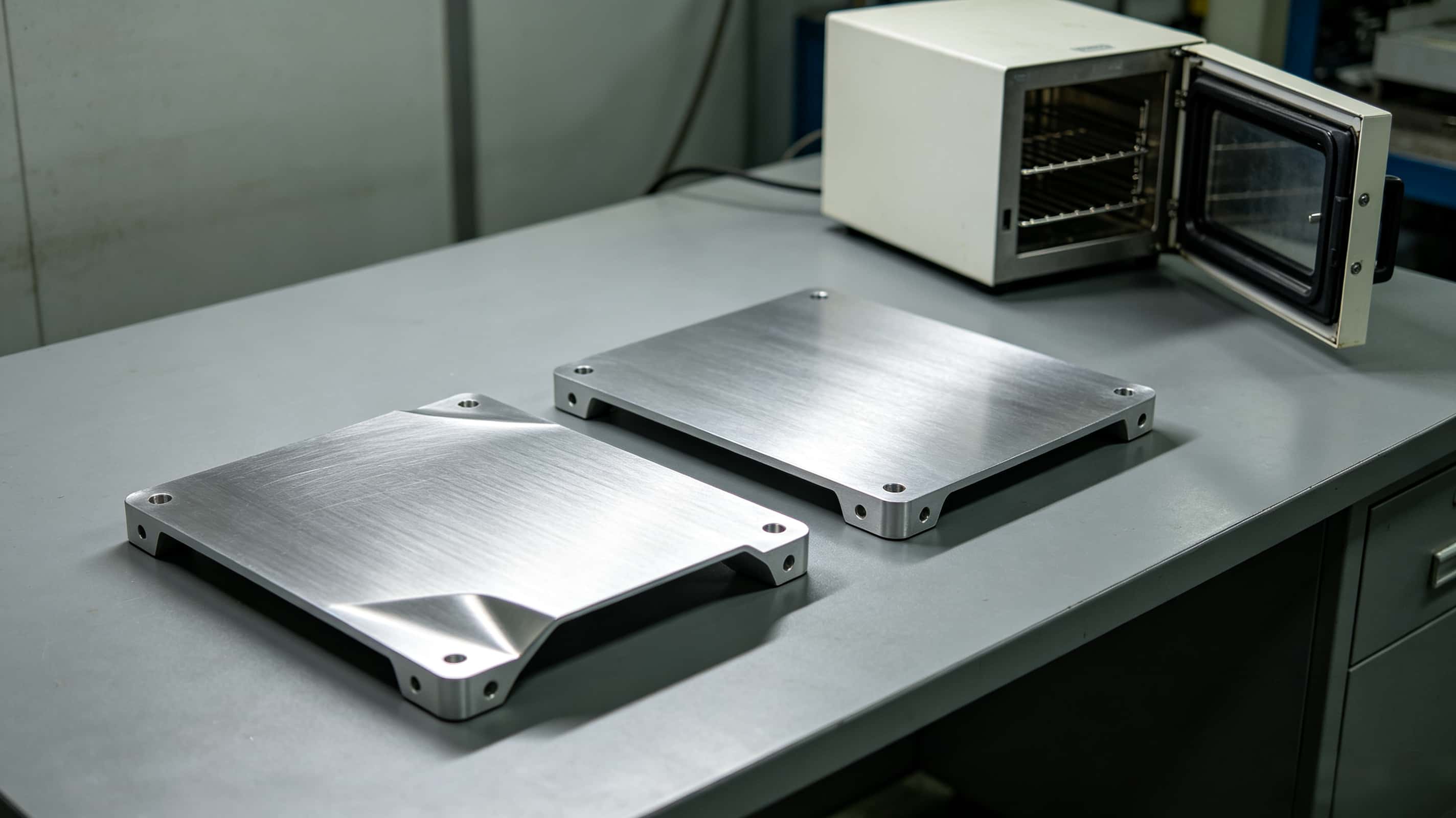
For thin-wall parts with flatness requirements under 0.05mm, we add a low-temperature stress relief step between roughing and finishing. We use a standard shop oven — 120°C for about two hours, then slow cool to room temperature.
This doesn’t change the material temper — we’re well below aging temperature — but it relaxes the machining-induced stress before the final cut. For EV cooling plate jobs, this step is now standard. Without it, we don’t guarantee flatness.
Here’s something we learned the hard way:
After roughing, when you’re ready for the final finish pass, loosen the clamps — not enough that the part moves, but just enough that it’s no longer being bent by clamping force. You’re relying on the part’s own rigidity and the locating pins, not clamp pressure, to hold position.
The final cut is made on a part that’s in its natural, unstressed state. When you release it later, it won’t move. It feels counterintuitive, but it works. We’ve been doing this for all critical flatness parts since 2021.
That last 0.1mm matters. We always run a final skim pass at high feed rate and very light depth of cut — typically 0.05–0.1mm. This removes the last layer of stressed material, leaves a clean surface (Ra 0.8 or better), and minimizes residual stress on the final surface.
It adds about 90 seconds per part. It also keeps flatness consistent across the entire batch — not just the first few pieces.
Typical Flatness Capability by Wall Thickness
|
Wall Thickness |
Part Size |
Industry Typical |
Our Production Result |
|
3.0mm |
100×100mm |
±0.05mm |
±0.02mm |
|
2.0mm |
150×100mm |
±0.08mm |
±0.03mm |
|
1.5mm |
200×150mm |
±0.12mm |
±0.05mm |
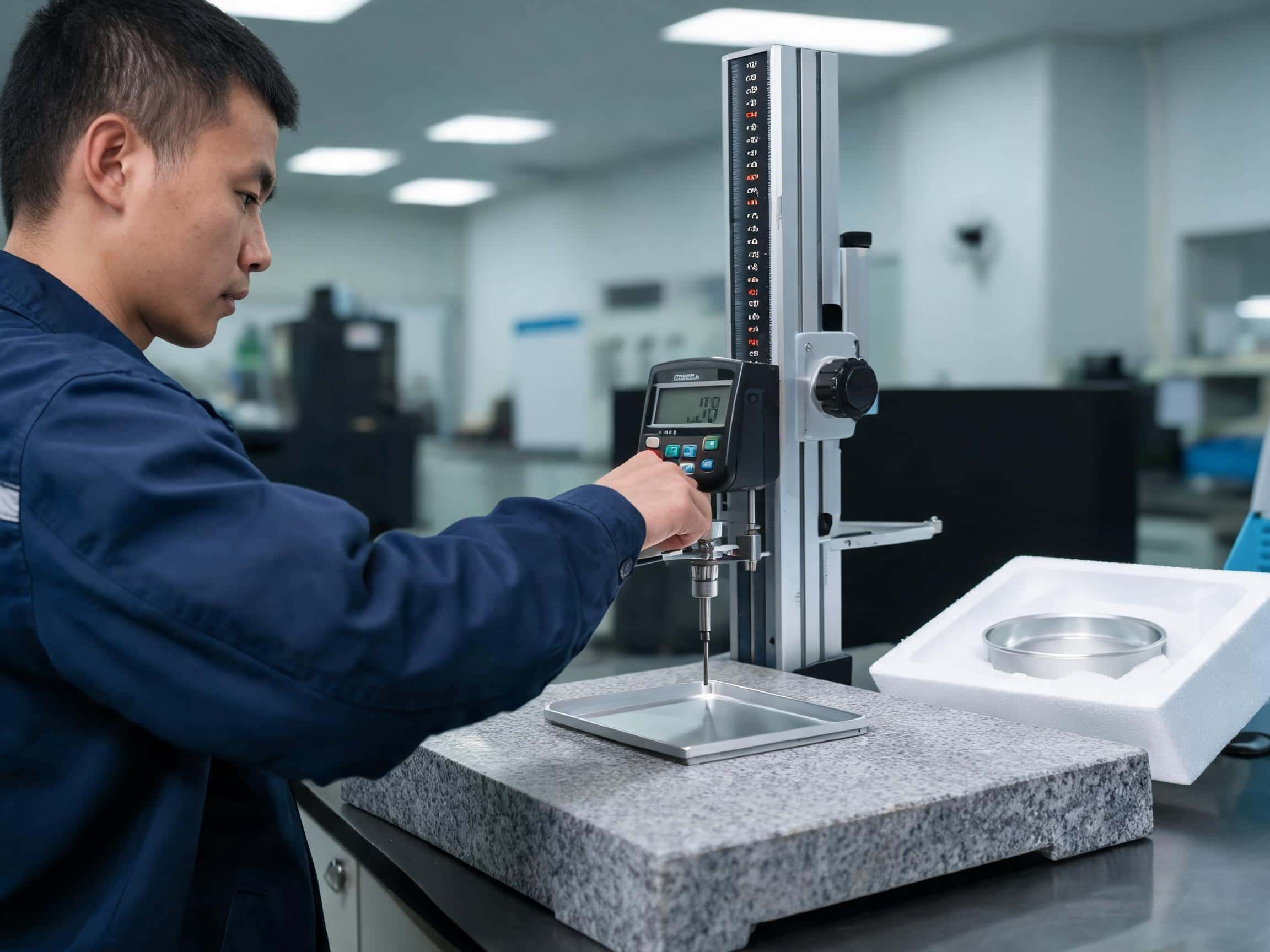
There’s no secret trick to avoiding warp in thin-wall aluminum parts. It’s just doing a dozen small things correctly, every single time. Most shops skip half of them to save time — then wonder why their batches are inconsistent.
We’ve been on both sides of that equation. We don’t skip them anymore.
Working on a thin-wall aluminum project? Send us your CAD files and flatness requirements. We’ll do a free DFM review, tell you honestly what tolerance is realistic, and give you a firm quote within 24 hours. No fluff, no overpromising — just shop-floor proven processes.
Tél : 0755-23596843
WhatsApp : +86-13267211181
E-mail : sales02@gt-proto.com
No.18, Shaqi Community Center Road, Xinqiao Street, Baoan District, Shenzhen, Guangdong Province, China 518104
Links :
test© 2026 Shenzhen GT Prototype Co., Ltd Tous les droits sont réservés.
Plan du sitePolitique de confidentialitéXml